
Generative AI has quickly become one of the most important technologies in the digital world. From writing and creating images to generating videos, audio, and computer code, generative AI is changing how people work, learn, and create.
But what exactly is generative AI, how does it work, and what can you actually do with it?
In this guide, we explain generative AI in simple terms and explore its most useful applications.
What Is Generative AI?
Generative AI is a type of artificial intelligence that can create new content based on a user’s instructions, commonly called prompts.
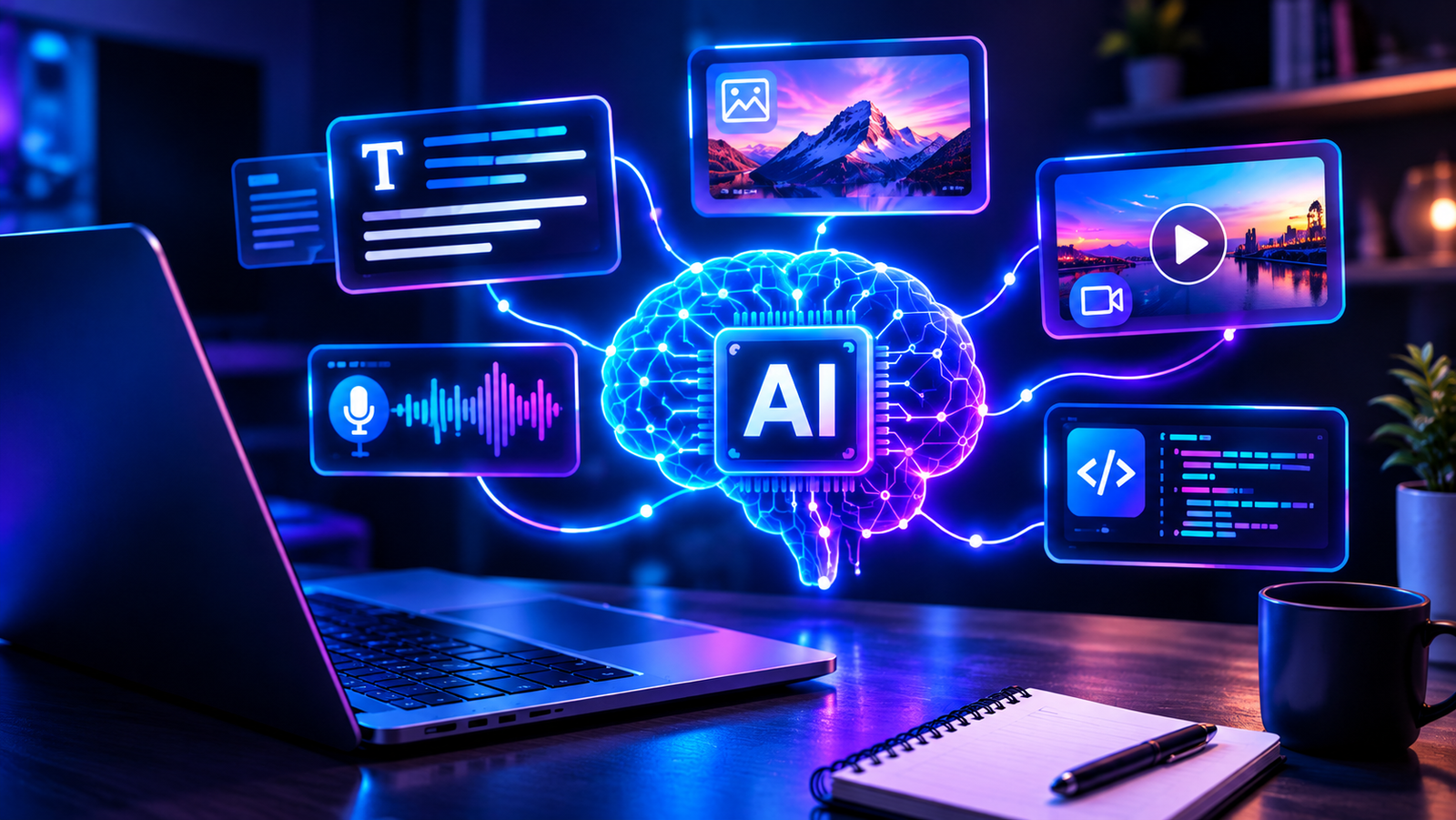
Unlike traditional AI systems that may focus on analyzing information, classifying data, or making predictions, generative AI can produce content such as text, images, video, audio, and software code.
Popular generative AI applications include AI chatbots, image generators, video creation tools, voice generators, and AI coding assistants.
How Does Generative AI Work?
Generative AI systems are trained using large amounts of data. During training, AI models learn patterns and relationships within that data.
When a user provides a prompt, the model uses what it learned to generate an output that matches the request.
For example, a user could ask an AI tool to:
- Write a blog introduction
- Create an image from a description
- Summarize a long document
- Generate computer code
- Create a video concept
- Produce a voiceover
- Brainstorm business ideas
The quality of the result often depends on the model, the available tools, and how clearly the user describes what they want.
What Can Generative AI Create?
One of the biggest advantages of generative AI is its ability to work with different types of content.
Text
AI writing tools can help users create articles, summaries, emails, social media posts, product descriptions, scripts, and other types of written content.
However, AI-generated text should always be reviewed for accuracy, clarity, and originality before publication.
Images
AI image generators can create illustrations, realistic scenes, marketing graphics, concepts, and other visual content from text prompts.
This has made AI particularly useful for designers, marketers, content creators, and businesses.
Video
Generative AI can also assist with video creation. Depending on the tool, users can generate video clips, animations, visual effects, or other elements from text and images.
Audio and Voice
AI voice tools can generate natural-sounding speech, narration, and other audio content. This can be useful for videos, podcasts, presentations, and accessibility.
Code
AI coding assistants can help developers write, explain, modify, and debug software code.
For beginners, these tools can also make programming concepts easier to understand.
Why Is Generative AI Important?
Generative AI is important because it can reduce the time required to perform many creative and repetitive tasks.
A creator can use AI to brainstorm ideas before producing a video. A business can use AI to draft marketing materials. A student can use AI to organize research or explain difficult concepts.
The technology does not necessarily replace human creativity. In many situations, it works best as an assistant that helps people move faster while humans remain responsible for reviewing and improving the final result.
What Are the Benefits of Generative AI?
Some of the most common benefits include:
- Faster content creation
- More efficient research and brainstorming
- Assistance with repetitive tasks
- Faster software development
- Easier creation of images and videos
- Personalized learning support
- New opportunities for businesses and creators
The best results usually come from combining AI capabilities with human judgment, experience, and creativity.
What Are the Risks of Generative AI?
Generative AI is powerful, but it is not always accurate.
AI systems can produce incorrect information, misunderstand a request, or generate content that sounds convincing even when it is wrong.
For this reason, important information should be verified using reliable sources before it is published or used to make important decisions.
Users should also consider privacy, copyright, security, and the terms of service of the AI tools they use.
How Can You Start Using Generative AI?
The easiest way to start is to choose one practical task and experiment with an AI tool.
For example, you could use AI to:
- Brainstorm ideas for a project.
- Summarize a document.
- Improve a piece of writing.
- Create an image concept.
- Learn a new subject.
- Generate a simple piece of code.
- Automate a repetitive task.
Instead of trying dozens of AI tools at once, focus on learning one tool and understanding how to get useful results from it.
The Future of Generative AI
Generative AI is continuing to evolve rapidly. New models and applications are expanding what AI can do with text, images, audio, video, code, and other types of information.
AI is also moving beyond simple content generation. Newer systems are increasingly designed to interact with tools, use external information, and complete multi-step tasks.
This means the future of AI may involve not only generating content, but also helping people complete entire workflows.
Final Thoughts
Generative AI is changing the way people create, work, learn, and interact with technology.
It can write text, generate images, assist with coding, create audio and video, and help automate repetitive tasks.
But AI should be viewed as a tool rather than an automatic replacement for human judgment. The strongest results come when people use AI to increase their productivity while carefully reviewing the information and content it produces.
As the technology continues to develop, understanding how generative AI works and how to use it responsibly will become increasingly valuable.
At Moment with AI, we’ll continue covering the latest AI tools, news, tutorials, reviews, and practical ways to use artificial intelligence.